Gophers 101 — Biology & Identification
What is a pocket gopher?
Pocket gophers are subterranean rodents named for their fur‑lined external cheek “pockets,” used to carry food and nest material. Adults are typically 6–10 inches long with small eyes/ears, strong forelimbs, and prominent incisors adapted for digging (their lips can close behind the teeth to keep soil out).
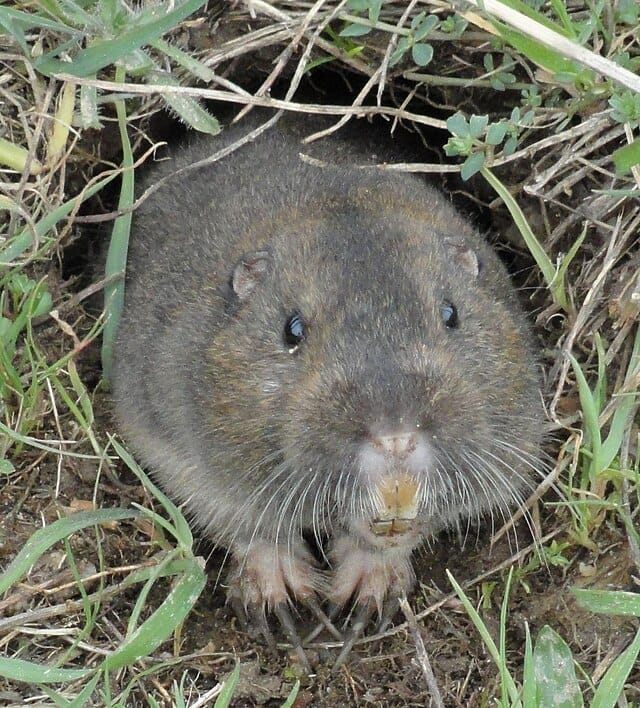
Why you rarely see them
Gophers spend almost all of their time underground in burrow systems that can span 200–2,000 sq ft, with feeding tunnels about 6–12 inches deep and deeper nest/food chambers.
Gopher vs. mole vs. vole
- Gopher mounds: low, fan‑ or crescent‑shaped; plugged hole off to one side.
- Mole mounds: higher, round “volcanoes” with a central plug; surface ridges are common.
- Voles: open holes and surface runways, no mounds.
Ecological role
Even as pests, gophers aerate soil, move nutrients, and provide prey and burrows for other species—benefits worth considering when choosing control intensity.
Species notes
Most yard and farm issues involve Thomomys spp. (West) or Geomys spp. (Plains/Midwest). In south Puget Sound (WA), several Mazama pocket gopher subspecies are federally listed as Threatened.