Guide
Signs & Damage
Learn to read gopher mounds, understand typical damage, and spot seasonal patterns.
How to read the signs
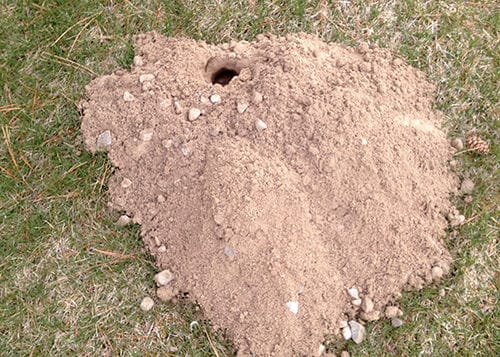
- Fresh mounds (moist, loose soil) = active tunnels nearby. One gopher can create several mounds per day.
- Mounds cluster over main tunnels that run 6–12 inches deep; openings are usually plugged to keep light and air out.
Typical damage
- Landscape: dead/wilted plants from root feeding, irrigation line chewing, and unsightly mounds.
- Agriculture: yield loss in alfalfa/orchards, buried plants, diverted irrigation water, equipment wear.
- Structures: foundation damage from soil heaving, burrow collapse under slabs, and increased erosion.
Seasonality
- In non‑irrigated settings, activity peaks in cool, moist months.
- In irrigated landscapes, expect activity year‑round.
- Gophers may dig deeper in summer to reach moist soil.